Selling a Home With Unpermitted Work in Walnut Creek
Can you sell a Walnut Creek home that has unpermitted work?
Yes. California lets you sell a home with unpermitted work, but you have to disclose what you know about it, and it can change your appraisal, your buyer's loan, and who is willing to make an offer. A lender's appraiser may leave unpermitted square footage out of the value, so your three real choices are to legalize the work before listing, disclose it and price around it, or remove it.
By Michael Delehanty — Delehanty Group | DRE #01505346 | November 6, 2026
Almost every older East Bay home has something in it that never saw a building inspector. A garage turned into a bedroom, a deck added on a weekend, a water heater swapped by a handyman, a room finished by an owner years ago. One agent quoted by HomeLight estimates that 40% to 50% of homes have some form of unpermitted work. Most of it stays quiet until a buyer's agent, appraiser, lender, or insurer notices it, and that almost always happens after you're already in contract.
Timing matters more than usual right now. Walnut Creek's September median sale price was $847,596 with homes taking about 33 days to sell (Redfin), and the average 30-year rate was 7.18% in Freddie Mac's November 5 survey. Buyers are stretched on monthly payments and have leverage, so a surprise at the appraisal is more likely to become a price cut, a credit, or a cancelled contract.
Start with what's on record, and what you have to disclose
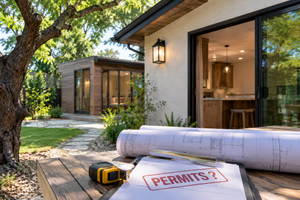
Before you list, find out what the city has on file for your address. The City of Walnut Creek Building Division handles permits (925-943-5834 or BuildingTech@walnut-creek.org), and applications now go through its online portal. Then walk the house the way a builder would and compare the two. The city says a permit is required for things like water heaters, furnaces, air conditioners, re-roofing, window replacement, kitchen and bathroom remodels, and decks, while painting, small sheds, and fences up to 6 feet generally don't need one. Here's the short list I look for:
- A garage converted to a bedroom, office, or kitchen
- A bathroom or "bonus room" added without a final inspection
- A deck, patio cover, or retaining wall
- A new panel, subpanel, EV charger, or gas line
- A detached unit or junior ADU that was never permitted
- A furnace, air conditioner, or water heater replaced without a permit
Then comes the disclosure question. California's Transfer Disclosure Statement asks whether you're aware of room additions, structural modifications, or repairs made without necessary permits or not in compliance with building codes (Civil Code §1102.6). The question is about what you know, and that includes work a previous owner did. HomeLight cites a case where a seller lost in court for failing to disclose an unpermitted addition built before they owned the home. Disclosing isn't an admission that you did something wrong. It's what protects you after closing. Our guide to 2026 seller disclosures walks through the TDS and SPQ line by line.
How unpermitted work shows up in your sale
Here's the pattern that costs sellers money. In this market, sellers usually order inspections before listing and buyers rely on those reports. An inspection report describes condition. It generally doesn't confirm permit history. So the issue tends to surface later, when the buyer's agent pulls records, the appraiser measures the house, or the lender starts asking questions.
- Appraisal. Appraisers handle it differently. Some give no value at all to unpermitted space, and others look for comparable sales with similar work. Fannie Mae requires the appraiser to comment on the work and its effect on value, and the space only counts if comparable sales show the local market accepts it. As a round-number example, a 350-square-foot unpermitted conversion priced in at $600 per square foot is $210,000 of value an appraiser may not count.
- Loan. Some lenders won't finance a property with unpermitted areas and ask the appraiser to exclude that square footage. Others will lend if the appraiser writes a well-supported report. On FHA loans, the appraiser flags safety issues and the loan can be made subject to repairs.
- Insurance. An insurer may deny a claim tied to unpermitted work, and the City of Walnut Creek itself lists insurance, a sale in escrow, and your liability exposure as reasons to legalize.
- The buyer's exit. A buyer still inside the contingency period can generally cancel over a serious finding and keep the deposit.
That's why the pricing question isn't "is the space worth something?" It's "will it appraise?" If you list at a price that counts unpermitted space and the appraisal counts only the permitted footage, you end up negotiating the gap from a weak position.
Your three options
1. Legalize it before you list. Walnut Creek's legalization bulletin (PB-025) treats the application as new construction. The work has to meet the codes in effect when you apply, no matter when it was built. Plans need to show what stays, what comes out, and what's being legalized, and the inspector has to see the framing, plumbing, electrical, and mechanical work, which can mean opening walls. If footings or foundations can't be inspected, you either rebuild them or hire an engineer or architect for a stamped report. Because you're meeting today's code, work that touches windows, HVAC, or insulation can pull in the new energy standards (see our 2026 Title 24 remodel cost breakdown).
Simple permits like a water heater are typically reviewed in 3 to 5 business days. A large retroactive permit can take weeks to a few months, which doesn't fit a 30 to 45 day escrow. This is where my 15 years as a contractor earns its keep: get a builder to scope the work and put a number on it before you decide. I'd rather you hear that number in November than from a buyer's agent in the middle of escrow. Legalizing makes the most sense when the work is substantial, you're pricing it as living space, and you have the time.
2. Disclose it and price around it. List with full disclosure, price off the permitted square footage, and treat the unpermitted space as upside the buyer can legalize. Expect a narrower buyer pool, since cash buyers, investors, and renovators are the natural audience. For something minor, like a skipped permit on a water heater swap or a small deck, a credit is often the simplest fix. Our fix-up or sell as-is breakdown covers how to weigh that trade-off.
3. Remove or restore it. Some conversions are cheaper to undo than to legalize, like returning a garage to a garage or taking out a kitchen that was never approved. Check with the city first, because removal can involve its own permit, and make sure you aren't leaving a bigger problem behind the wall.
If it's an ADU, there's a clock. California Health and Safety Code §17980.12 lets an owner who receives a notice to correct a violation on an ADU built before January 1, 2020 apply for a five-year enforcement delay, as long as correcting it isn't necessary to protect health and safety. Agencies can't approve new applications on or after January 1, 2030. That delays enforcement. It doesn't make the unit legal, so lenders and appraisers still see it as unpermitted. If you're weighing a legal ADU instead, start with our ADU costs and permits guide.
Here's the order I'd work in:
- Ask the city what's on file for your address and compare it to the house.
- Have a contractor scope what legalizing or removing the work would take, with a number and a timeline.
- Ask your agent to run the "square footage not counted" scenario on your price.
- Choose your path, then write your disclosures to match what you know.
Frequently Asked Questions
Do I have to disclose unpermitted work I didn't do myself?
Yes, if you know about it. California's TDS asks about additions, structural changes, and repairs made without permits, and the question covers work done by a previous owner. This is general information, not legal advice, so confirm your specific disclosures with a real estate attorney.
Will unpermitted square footage count in my home's appraisal?
Often not. Some appraisers give unpermitted space no value, and others count it only if comparable sales show buyers pay for similar work. Even a permitted conversion, like a garage turned into a bedroom, doesn't automatically add full value.
Can a buyer back out if they find unpermitted work?
Usually, as long as they're still inside their contingency period. A serious finding can let them cancel and keep their deposit, or ask for a price reduction or credit. Once contingencies are removed in writing, walking away gets more expensive for the buyer.
Will the City of Walnut Creek fine me for old unpermitted work?
The city's legalization bulletin doesn't list a penalty fee, but it can require the work to meet current code, and removal remains possible in some cases. Call the Building Division at 925-943-5834 and ask what legalizing your specific work would involve before you list.
What if the unpermitted work is an ADU or garage unit?
If the ADU was built before 2020, a five-year enforcement delay may be available after a violation notice, but it doesn't legalize the unit or fix a lender's concerns. Get a contractor's scope first, then decide whether to legalize, disclose and price it in, or remove it.
If you're trying to figure out what this means for your specific situation, I'm happy to walk you through it. Text or email me directly — (510) 697-3900 or michael@delehantyre.com — and we'll talk through the numbers. This is general information, not legal advice, so have a California real estate attorney review how you disclose or resolve unpermitted work.
About Michael Delehanty — Delehanty Group | DRE #01505346
Michael Delehanty is a Walnut Creek-based real estate agent with Compass, specializing in buying and selling homes across the East Bay — including Walnut Creek, Concord, Pleasant Hill, Danville, Orinda, and the surrounding communities.
Before becoming a real estate agent, Michael spent 15 years running his own contracting firm in the East Bay, working on thousands of homes and major projects across the Bay Area. That hands-on construction background gives his clients a distinct advantage: when Michael walks through a property, he sees what most agents simply can't. From structural details to renovation potential, his experience translates directly into sharper pricing, smarter negotiation, and fewer surprises at the inspection table.
Michael has been a licensed Realtor since 2005, bringing more than 20 years of experience to every transaction. He has successfully guided clients through complex situations including short sales, bank-owned properties, investment transactions, and competitive multiple-offer scenarios. Whether you are a first-time buyer, a move-up seller, or an investor, Michael brings the market knowledge and problem-solving skills to get deals done.
What sets Michael apart is his deep roots in this community. He has lived in Walnut Creek for nearly 30 years and is genuinely invested in the people here — not just the properties. He served four years as Auction Chair and Athletic Boosters President at Las Lomas High School, and has been a member of a local book club for eight years. His two daughters grew up here, attending Las Lomas before going on to the University of Washington and Cal Poly San Luis Obispo. When Michael helps you buy or sell a home in Walnut Creek or the surrounding East Bay communities, he is not just doing a transaction — he is working in the neighborhood where he has built his own life.
michael@delehantyre.com | (510) 697-3900 | michaeldelehanty.com